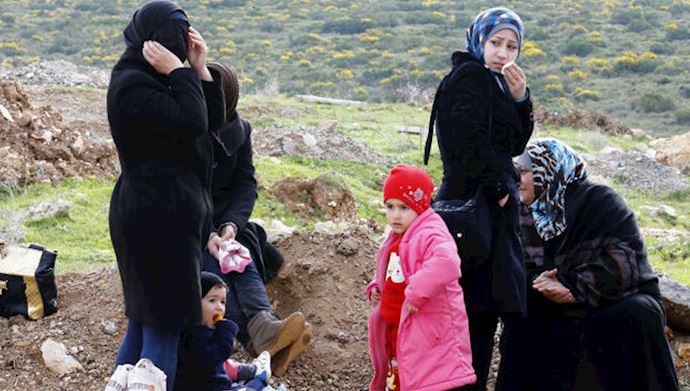
The majority of migrates are from provinces of Kermanshah, Khuzestan, Lorestan,Bluchestan and Fars
Analysis by PMOI/MEK
Oct. 26, 2018 - As Hurricane Michael leaves a seaside Florida town in an existential crisis, a new wave of migration hits Iran, and it’s going to change the population map and leave Iran in an existential crisis. But this time, the wave of migration rises from drylands.
In July 2017, Hassan Rouhani’s advisor in water, agriculture, and environmental affairs told the state-run website Aftab News that 70 percent of Iranian people –almost 50 million people– have to migrate to save their lives if the water crisis continues.
No agriculture, no life; Lack of both irrigation and potable water drive these people from dryland to other places, leaving deserted villages behind. Now we can hear the sound of migrates’ steps through the media, mostly moving from the southern and central regions toward the green lands of Mazandaran province in northern Iran.
According to official reports by the Presidential Deputy in Strategic Planning and Control, over 5.5 million people migrated internally in Iran between 2006 and 2011. The report also indicates that 78 percent of those inhabited cities and 22 percent chose to live in villages.
The majority of migrates are from provinces of Kermanshah, western Iran; Khuzestan, Lorestan in the south-west; Bluchestan in the south-east and Fars southern Iran. Migrates mostly moved to Northern provinces of Tehran, Alborz, Isfahan, Gilan, and Mazandaran.
The first question that strikes the mind is “why?” Why should millions of people leave their own houses and lands for new and strange locations? Water crisis could be the first answer to the question, but the main reason is more complicated and stems from Iran’s political history.
Background of internal migration
The Motaleat Shahri Magazine, the journal of urban studies, explains the concept of migration in Iran. The magazine spring of 2013 issue highlighted that the concept of migration started in the aftermath of WWII during the Pahlavi’s era. The era coincided with the half-baked growth of capitalist relations, the growing role of petroleum in the political economy of Iran, and farmers’ dependence on cash. The occupation of Iran by the Allied Forces in WWII prepared the ground for more migration from villages to cities. However, the rate of internal migration to cities was 1.5 percent during 1956-1962.
The second wave of migration belongs to 60s when Shah’s government launched a series of reforms called “White Revolution”, the agenda that continued during the current regime to date. The 60s era witnessed a swift extension of cities and the expansion of governmental bureaucracy. Figures show the catastrophic results of Shah’s reforms, as the urban population was 31.4 percent in 1956, but it increased to 71.3 percent in 2011.

