Showing posts with label (PMOI/MEK). Show all posts

Friday, October 26, 2018

Inside Iran’s new migration crisis

The majority of migrates are from provinces of Kermanshah, Khuzestan, Lorestan,Bluchestan and Fars
Analysis by PMOI/MEK

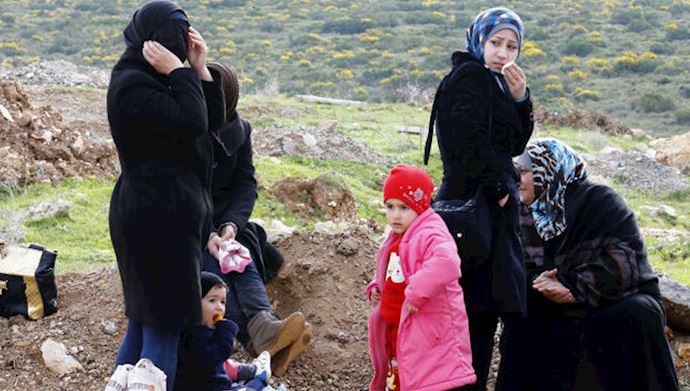
Oct. 26, 2018 - As Hurricane Michael leaves a seaside Florida town in an existential crisis, a new wave of migration hits Iran, and it’s going to change the population map and leave Iran in an existential crisis. But this time, the wave of migration rises from drylands.
In July 2017, Hassan Rouhani’s advisor in water, agriculture, and environmental affairs told the state-run website Aftab News that 70 percent of Iranian people –almost 50 million people– have to migrate to save their lives if the water crisis continues.
No agriculture, no life; Lack of both irrigation and potable water drive these people from dryland to other places, leaving deserted villages behind. Now we can hear the sound of migrates’ steps through the media, mostly moving from the southern and central regions toward the green lands of Mazandaran province in northern Iran.
According to official reports by the Presidential Deputy in Strategic Planning and Control, over 5.5 million people migrated internally in Iran between 2006 and 2011. The report also indicates that 78 percent of those inhabited cities and 22 percent chose to live in villages. 
The majority of migrates are from provinces of Kermanshah, western Iran; Khuzestan, Lorestan in the south-west; Bluchestan in the south-east and Fars southern Iran. Migrates mostly moved to Northern provinces of Tehran, Alborz, Isfahan, Gilan, and Mazandaran.
The first question that strikes the mind is “why?” Why should millions of people leave their own houses and lands for new and strange locations? Water crisis could be the first answer to the question, but the main reason is more complicated and stems from Iran’s political history.


Background of internal migration

The Motaleat Shahri Magazine, the journal of urban studies, explains the concept of migration in Iran. The magazine spring of 2013 issue highlighted that the concept of migration started in the aftermath of WWII during the Pahlavi’s era. The era coincided with the half-baked growth of capitalist relations, the growing role of petroleum in the political economy of Iran, and farmers’ dependence on cash. The occupation of Iran by the Allied Forces in WWII prepared the ground for more migration from villages to cities. However, the rate of internal migration to cities was 1.5 percent during 1956-1962.
The second wave of migration belongs to 60s when Shah’s government launched a series of reforms called “White Revolution”, the agenda that continued during the current regime to date. The 60s era witnessed a swift extension of cities and the expansion of governmental bureaucracy. Figures show the catastrophic results of Shah’s reforms, as the urban population was 31.4 percent in 1956, but it increased to 71.3 percent in 2011.

Monday, June 25, 2018

Italy: Approval Of The Statement “Freedom And Democracy For Iran”And Support For The Iranians Grand Gathering On June 30th

Approval of the statement “Freedom and Democracy for Iran”And support for the Iranians Grand gathering on June 30th
By the Italian municipalities
June 2018
The “Freedom and Democracy for Iran” statement was approved by the municipalities of Rivoli, Cavagnolo, Fossano and the Union of Mayors of Pinerolese, with a majority vote of members and turned into law.
The statement read of Fossano
 Freedom and democracy for Iran, Iranians Grand gathering
For almost four decades the theocratic dictatorship in Iran has oppressed the Iranian people and for this has been repeatedly condemned by the UN and various organizations tasked to defend human rights.
In recent years, Iranians have suffered from the most vicious forms of repression, censorship, and continuous violation of human rights such as public hangings, group executions, torture and sexual abuses of political prisoners, stoning to death, amputation of limbs, arbitrary arrests, and denial of fundamental freedoms.
Over 120,000 dissidents and activists for the democracy and human rights have been executed and their family members have been the subject to arbitrary arrests, atrocious torture and, in some cases, execution.
In the summer of 1988 the Iranian regime extra-judicially executed more than 30,000 political prisoners – mostly members and supporters of the opposition movement the People’s Mojahedin of Iran (PMOI/MEK) in prisons across the country – on the basis of a religious decree (fatwa) issued by the then-supreme leader Ruhollah Khomeini.
Amnesty International has called this mass execution a “crime against humanity” and called for the perpetrators to be brought to justice.
#FreeIran2018


Sunday, June 17, 2018

Why should the world stand against Iran’s regime?

The international community must stand against the Evil regime of Iran
Analysis by PMOI/MEK

Iran, June 17, 2018 - The most documented and truthful judgements of a state are those made by individuals inside the regimes.
The heir to Iranian regime founder Khomeini, Grand Ayatollah Hossein Ali Montazeri, said in the early years of Iran’s 1979 revolution: “I am willing to go to the gates of hell with Khomeini, yet I’m not willing to enter.”
There are many leaders like Khomeini who enjoy such enormous popularity – six million people with the utmost hope went to welcome Khomeini’s entrance into Iran – and yet few become one of the world’s most abhorred leaders in just a few years. Traditional dictators take decades to go down such a path.
Many in Iran viewed Khomeini as a father for the entire nation, only to see him show his wrath to and launch a devastating reign of terror.
It was the People's Mojahedin Organization of Iran (PMOI/MEK) that stood against Khomeini to defend the 1979 revolution’s achievements.
Khomeini made startling remarks in a speech on February 3rd, 1985.
“… There are times when a person is not corrected, unless they are cut and burned. To those not falling under this category, kill them, jail them… humanity must be provided for through retaliation… set aside these childish emotions,” he said.
Ayatollah Montazeri’s faceoff against Khomeini climaxed over the 1988 massacre of more than 30,000 political prisoners, mainly members and 
#IHaveADream 4 #FreeIran2018

Friday, June 15, 2018

The political difference of this year’s Free Iran convention

By: PMOI/MEK

Paris, June 14, 2018 - Developments involving Iran have accelerated at an amazing rate. Even those supporting the Iranian regime now agree the situation on the ground in Iran is heading towards a major finale.
Domestically speaking, during the past weeks we have witnessed major protests – some describing it as an uprising – by the people of Kazerun, a city in southern Iran. Furthermore, tens of thousands of truck drivers across the country were holding a nationwide strike.
Internationally, the consequences of the United States pulling out of the Iran nuclear deal are impacting the Iranian regime to the core. The 12-article statement issued by U.S. Secretary of State Mike Pompeo hurled this crisis into an even more dangerous and complex state for Tehran. Moreover, new sanctions are being imposed on the mullahs’ economy and causing grave concerns for their senior officials.
In such circumstances, the Iranian opposition National Council of Resistance of Iran (NCRI), and its core member, the People's Mojahedin Organization of Iran (PMOI/MEK), is focusing their efforts to increase and continue popular protests across the country.
In parallel fashion, the Iranian Diaspora, widely supporting the NCRI & the PMOI/MEK, are on the verge of holding their annual convention in Paris, this year scheduled for June 30t
h.
  #IHaveADream 4 #FreeIran2018

Sunday, March 4, 2018

European MP ties to Islamic Republic of Iran


European MP ties to Islamic Republic of Iran
By David N. Neumann
After lashing out against opponents of the Islamic Republic of Iran in several parliamentary debates, a member of the European Parliament has admitted to doing the bidding of Tehran. In a meeting in Brussels, Portuguese socialist MEP Ana  acknowledged that she had been instructed in Tehran to bash the Iranian opposition.
“I met with relatives of the victims of a terrorist organisation called MEK,” she said on her visit to Tehran in a meeting of the European Parliament’s Foreign Affairs Committee on 22 February 2018. After making a number of allegations about the Iranian opposition movement PMOI or MEK, she added: “We cannot continue to allow some members of this parliament, possibly out of naiveté, to continue to abet some of the members of this organization.”

Saturday, February 24, 2018

Iran's cyber warfare against its people must not stand

New cyber revelations from the People’s Mujahedeen of Iran (MEK), the Iranian opposition movement, about the scope of mass surveillance by the Iranian regime are significant. Why? They show the desperation of the Iranian regime in confronting the uprising that began nationwide last December and has continued to this day.  
Anti-government protesters  chanted slogans indicative of a revolution: “Death to the dictator,” “Death to (Supreme Leader) Khamenei”, “Death to (Hassan) Rouhani,” “Don’t be afraid, we are all together,” “Forget about Syria, think about us,” “Not Gaza, nor Lebanon, my life for Iran,” and “Reformer, Hardline, the Game Is Now Over.”
The fact that protests expanded to over 140 cities, by some estimates, constitutes an existential threat to the regime and an opportunity to use the people’s resentment as leverage against it. The Obama administration squandered valuable opportunities in the past — most notably during the 2009 anti-government protests in Iran.
Only when the Iranian regime employed cyber technology was it able to slow down the spread of the protests and wage large numbers of arrests.

Tuesday, February 20, 2018

IRAN REGIME’S MILITARY OFFICIAL ADMITS TO LEADING ROLE OF THE MEK / PMOI IN RECENT UPRISINGS

by Mahmood Hakamian
“The protests that erupted recently across Iran involved setting fire to the State Security Force’s motorcycles, breaking the windows of religious seminaries in Abhar and Zanjan, setting fire to police kiosks in Arak, opening fire on the IRGC with hunting rifles, assaulting a State Security Force officer with a brick….” according to Brig. Gen.  Sanai, Political Affairs Deputy for the Islamic Revolutionary Guards Corps.
Sanai spoke about the behind the scenes developments of the recent unrest, “Their plan was to spread the riots from the surrounding areas to the capital (Tehran) because they believe owing to previous incidents in Tehran and major cities, Iran’s security and defense forces had been trained and gained the expertise to confront riotous actions. But in other cities the potential for inciting the public is much greater and the security forces have a lesser presence.”
He blamed the Iranian Resistance for the escalation of the protests, saying, “As such, the most serious clashes took place in Touyserkan (Hamedan Province) and several people were killed, including two people who attacked the prison and have yet to be identified. The leaders and those inciting the protests in this city were from the ‘Hypocrites’ (MEK or PMOI). They had come from other cities so as not to be identified. Those who were detained were pursued from the time of MEK incursion into western Iran in 1988….”

Sunday, February 18, 2018

HOW POPULAR IS THE MEK IN IRAN?

by Mahmood Hakamian 
One of the most common reasons given for dismissing the Iranian Resistance, specifically the People’s Mojahedin of Iran (PMOI/MEK), is that it is unpopular within Iran. This is simply untrue.
The MEK is the largest and most popular people’s resistance movement within Iran and it enjoys support from all sectors of the population. The Mullahs’ Regime, on the other hand, is highly unpopular among the Iranian people as evidenced by the hundreds of protests per day in 2017, which was admitted to by the Regime and finally by the recent nationwide protests and uprising in which the Iranian people clearly expressed their desire for regime change as the one and only solution to all the problems.
Getting precise numbers of MEK members and supporters in Iran is impossible because this organization has been banned there since the early 1980s, shortly after the then Supreme Leader Ruhollah Khomeini declared the MEK to be enemies of the Regime.
The punishment under the Regime for being associated with the MEK can be execution- under some vague charges of enmity against god- so it is no wonder that MEK members have to keep their political affiliation under wraps. Despite this, many Iranians will hold MEK banners or flags during protests or hang them up in public places before elections, so you can see that the MEK is incredibly popular in Iran.

Wednesday, February 14, 2018

IRAN RESISTANCE GROUP MEK CALLS ON INTERNATIONAL COMMUNITY TO SUPPORT PROTESTERS

By INU Staff
INU - The Iranian Regime is involved in “warmongering and belligerence” in order to fuel crises in the Middle East, according to Iran’s organised democratic forces, the People’s Mojahedin Organization of Iran (PMOI/MEK).
The Iranian Regime’s regional aggression has also been criticised by the Iranian people during their ongoing nationwide anti-regime protests, and the MEK are advising that the international community back the protesters’ calls for regime change in order to avoid Iran starting another war in the Middle East.
MEK representative Shahin Gobadi said: “The regime’s warmongering and belligerence is a major source of concern and tension in the region that can lead to a major war. But it can be averted. Years of policy of appeasement by Western governments emboldened the Iranian regime. The overthrow of the Iranian regime and establishment of peace and democracy in Iran would have a lasting impact in establishment of peace and in the region.”
The area is on the edge of all-out war, as tension rise between Iran and its neighbours over Iran’s support for terrorism and proxy militias.
Indeed, Iran has tens of thousands of fighters in Syria, where they have spent $100 billion propping up the Assad Regime since 2011, is in direct conflict with Saudi Arabia over Iran-backed terrorist groups in Lebanon and Yemen, and is at odds with Israel after the downing of an Israeli fighter jet.
Gobadi said: “Export of terrorism and Islamic extremism, including warmongering and meddling in the region, has been a strategic pillar of survival of the regime and a cover for its domestic repression. Syria has been the lynchpin of this policy.”

We Should Listen Closely To Iran

As the world continues to debate the recent Iranian outburst of protests, its "lack of leadership" as they claim, and the road ahead, there is no doubt in the minds of senior Iranian regime officials over who led, and continues to lead, this latest uprising that continues to rattle the very pillars of the mullahs' rule.
Iran’s Supreme Leader Ali Khamenei made his thoughts crystal clear.
“The incidents were organized” and carried out by the Iranian opposition People's Mojahedin Organization of Iran (PMOI/MEK), he said although using a different term. “The [MEK] had prepared for this months ago” and “the  media outlets had called for it.”
The MEK is best known for first blowing the whistle on Iran's clandestine nuclear program back in 2002 and raising awareness over the possible military dimension (PMD) of this drive, a subject awaiting full clarification as we speak.

Interesting is how Khamenei's remarks, however, mirror those of influential American figures.

Thursday, February 8, 2018

We Should Listen Closely To Iran

As the world continues to debate the recent Iranian outburst of protests, its "lack of leadership" as they claim, and the road ahead, there is no doubt in the minds of senior Iranian regime officials over who led, and continues to lead, this latest uprising that continues to rattle the very pillars of the mullahs' rule.
Iran’s Supreme Leader Ali Khamenei made his thoughts crystal clear.
“The incidents were organized” and carried out by the Iranian opposition People's Mojahedin Organization of Iran (PMOI/MEK), he said although using a different term. “The [MEK] had prepared for this months ago” and “the  media outlets had called for it.”
The MEK is best known for first blowing the whistle on Iran's clandestine nuclear program back in 2002 and raising awareness over the possible military dimension (PMD) of this drive, a subject awaiting full clarification as we speak.

Interesting is how Khamenei's remarks, however, mirror those of influential American figures.

Monday, February 5, 2018

The Truth Behind the MEK in Iraq: Part 1

The People’s Mojahedin Organization of Iran (PMOI/MEK) have resided in two separate camps (Ashraf and Liberty) in Iraq from 1986 to 2016. This article will tell the story from 1986 until 2009.
In 1986, in addition to MEK members and sympathizers from Iran around 1,000 MEK members from France to Iraq to build a new operations base for the Iranian Resistance. They were granted a small patch of barren land in the desert, near to the Iranian border, with only a handful of deserted and partially-constructed buildings that had no running water or electricity. It expanded rapidly as MEK supporters from the West, mainly students and professionals travelled to the remote area with hopes of bringing democracy to Iran.
Iran-Iraq War
This was during the Iran-Iraq war, which the MEK, Iraq, and the people of Iran wanted to end. The mullahs, however, pushed on in the hope that they could turn Iraq into an Iranian province. Thus the MEK formed the National Liberation Army (NLA), which eventually resulted in a UN ceasefire to the war.
Following the war, the MEK build Camp Ashraf into a 14-square-mile city with a university, mosque, museum, bakeries, shopping centre, four Olympic size swimming pools, zoo, and various social and other sports facilities. However, they still remained committed to their objective of bringing democracy to Iran.
During this time, Ashraf was often the subject of attacks by the Iranian Revolutionary Guards (IRGC), but thanks to the MEK’s secure bunkers, casualties were minimal.
Gulf Wars
The next time that the MEK faced off with the Iranian Regime on a large scale was after of Saddam Hussein’s defeat in the first Gulf War. The IRGC crossed into Iraq, which was still in chaos, with the intention of eliminating the MEK. However, the MEK was prepared and caused Iran’s forces to retreat in defeat with huge losses.

DEBUNKING THE IRAN REGIME'S LIES ABOUT THE MEK: NO, THE MEK AREN’T MARXIST

by Poorang Novak
It is no secret that the Iranian Regime (both Mullah and Shah) have used disinformation campaigns to attack and discredit the Iranian Resistance group, the People's Mojahedin Organization of Iran (PMOI/MEK).
One of those disinformation campaigns is the ‘Islamist Marxist’ label that the Shah’s Secret Police (SAVAK) originally used to disparage the MEK in order to undermine its support among the devout Iranian people because the Shah was scared of the MEK’s potential to mobilise Iranians- particularly the youth- against the monarchy. The Shah and SAVAK also used it to disparage other political opponents of the monarchy.
Why? Because of the public perception of the word in Iran as being synonymous with atheism, materialism, and Westernism.
Newspaper reports didn’t help clear up the matter because all opponents of the monarchy (and there were many) would be placed in the same paragraph, meaning that the MEK would be listed in the same paragraphs as the Communist Party and the Marxist People’s Fedayeen, which may have given the false impression that their policies were similar.
After the 1979 Revolution, the MEK wanted to establish a democratic government, while Ruhollah Khomeini and his mullahs wanted a fundamentalist theocracy and the two groups clashed. After the Shah left, the mullahs began to attack the MEK using their terrorist proxy thugs.

Sunday, February 4, 2018

Maryam Rajavi’s 10-Point-Plan for a Free Iran


Many people around the world, wonder what Iran will look like after the Regime is removed for good. Luckily, they can look to the plan devised Maryam Rajavi, the leader of the Iranian Resistance Forces, to find out what lies ahead for a Free Iran.
Maryam Rajavi is the president-elect of the National Council of Resistance of Iran (NCRI), a coalition of Iranian Resistance groups, including the People's Mojahedin Organization of Iran (PMOI/MEK) as its largest member, which serves as a parliament in exile.
Let’s take a look at the ten-point-plan for a Free Iran in more detail, as it appears on Maryam Rajavi’s website.
First is a strong commitment to democracy, citing free and fair elections under universal suffrage as the only legitimate path to political power.
The NCRI already practice this with their own elections and should have no difficulty implementing it in a country desperate for democracy.
Second is a call for freedom of speech (including for the media), expression, political affiliation, and assembly, along with unconditional internet access for all.
Unlike the Regime, who fear these freedoms because they see them as their downfall, the NCRI and MEK champion the rights of every person to say their piece, even if it is in opposition to them. The Regime has banned the MEK as a political party since the early 1980s.
Third is a commitment to end the death penalty in Iran, a stark contrast to the mullahs’ Regime which is the largest executioner per capita in the world.

DEBUNKING THE IRAN REGIME'S LIES ABOUT THE MEK: NO, THE MEK AREN’T MARXIST

by Poorang Novak
It is no secret that the Iranian Regime (both Mullah and Shah) have used disinformation campaigns to attack and discredit the Iranian Resistance group, the People's Mojahedin Organization of Iran (PMOI/MEK).
One of those disinformation campaigns is the ‘Islamist Marxist’ label that the Shah’s Secret Police (SAVAK) originally used to disparage the MEK in order to undermine its support among the devout Iranian people because the Shah was scared of the MEK’s potential to mobilise Iranians- particularly the youth- against the monarchy. The Shah and SAVAK also used it to disparage other political opponents of the monarchy.
Why? Because of the public perception of the word in Iran as being synonymous with atheism, materialism, and Westernism.
Newspaper reports didn’t help clear up the matter because all opponents of the monarchy (and there were many) would be placed in the same paragraph, meaning that the MEK would be listed in the same paragraphs as the Communist Party and the Marxist People’s Fedayeen, which may have given the false impression that their policies were similar.
After the 1979 Revolution, the MEK wanted to establish a democratic government, while Ruhollah Khomeini and his mullahs wanted a fundamentalist theocracy and the two groups clashed. After the Shah left, the mullahs began to attack the MEK using their terrorist proxy thugs.
The mullahs and their Ministry of Intelligence and Security (MO)IS continued to misrepresent the MEK and referred to them as godless Marxists. However, the mullahs and the MOIS went much further than the Shah and the SAVAK in this regard, because the mullahs are alarmed by the MEK’s popularity and see the MEK as a threat to the Regime.

A FREE IRAN: MARYAM RAJAVI’S 10-POINT-PLAN

by Mahmood Hakamian 
Maryam Rajavi, the president-elect of the Iranian Resistance Forces has a ten-point-plan for a free Iran to ensure that the Iranian people will have democracy, equality, and freedom.
Maryam Rajavi is the leader of the National Council of Resistance of Iran (NCRI), a coalition of Iranian Resistance groups, which includes the People's Mojahedin Organization of Iran (PMOI/MEK) as its largest member. The plan is approved by both the NCRI and MEK.
Let’s take a little look at the plan.

  DEMOCRACY

The plan advocates free and fair elections as the only avenue to political leadership(1) and stresses that there will be universal suffrage(1) for the citizens of Iran, with no barriers to voting rights or holding political office based on class, race, religion(4), or gender(5).
In the free Iran envisaged by Maryam Rajavi, no political parties or groups will be criminalised for their beliefs(2).
This is a stark contrast to the Mullahs who criminalised the MEK in the early 1980s and continue to imprison, torture, and kill MEK members and affiliates to this day. The Iranian Regime also appoints the Supreme Leader and rig elections for the President and members of Parliament.

Friday, February 2, 2018

Iranian Opposition PMOI/MEK, Under the NCRI Umbrella, What Iran's Regime Is Actually Terrified Of

London, 9 Jan - For nearly two weeks now protests are mushrooming across Iran and literally shaking the very pillars of the country’s ruling regime. Various discussions continue over the scope of these protests, their comparisons to the 2009 and 1999 uprising episodes, what should be expected from the international community and how to trek forward, amongst other subjects.
What goes neglected to this day is the main source of the Iranian regime’s fear. Yes, this regime has a history of quelling small protests and major uprising, especially thanks to the world’s deafening silence.
And yet all the while, Iran has been vividly pinpointing the very source of its main concerns, being the existence of an organized opposition movement navigating and providing political depth to such a nationwide uprising. Tehran understands this concepts, considering how it unfortunately took advantage of such a void in the Arab Spring.
Clear signals
As the world strives to determine if these protests enjoy an organized nature, debating which party – if any – is behind this seemingly spontaneous movement, state-backed media in Iran are claiming that the Iranian opposition People’s Mojahedin Organization of Iran (PMOI/MEK) has been shaping the ongoing protests from their very beginning.
Supporters of Lebanon’s Hezbollah leader Sayyed Hassan Nasrallah during a public appearance by  in Beirut on October 11, 2016. (Reuters)
The PMOI/MEK is the main member of the Iranian opposition coalition, the National Council of Resistance of Iran (NCRI).
Here’s a brief chronology of semi-official Iranian state outlets pinpointing this reality:

Thursday, February 1, 2018

Disinformation Campaign of Iran Regime to Discredit Mek

London, 30 Jan - It is no secret that since it stole power in 1979, the Iranian Regime continually attempts to discredit the People's Mojahedin Organization of Iran (PMOI/MEK) both domestically and globally.
There are numerous accounts, by both the MEK and various Western institutions, of Iran’s so-called Intelligence Ministry (MOIS) targeting the MEK’s reputation in a “long-running and sophisticated information campaign”, “coordinated and financed by the Iranian intelligence services” to discredit the MEK.
Domestically
The Iranian Regime is scared of the MEK’s popularity in Iran and uses the MOIS to discredit the MEK among the Iranian people. As the mullahs control/censor most the media in Iran, it’s pretty easy for them to spread disinformation about the MEK, but luckily the Iranian people know the truth.
Internationally
The Iranian Regime is scared that the MEK has significant support outside of Iran, as they know that the more foreign governments who support the MEK and not the Regime, the more likely it is that the MEK will soon overthrow the Regime.
They want “Western countries to condemn and ban” the MEK and occasionally, as with the shameful and wrong terrorist designation, the Regime succeeds. Although, it is worth noting that this terrorist designation was less based on the Regime’s disinformation and more on the West’s attempt to appease the Regime.

HOW POPULAR IS THE MEK IN IRAN?

by Mahmood Hakamian 
One of the most common reasons given for dismissing the Iranian Resistance, specifically the People’s Mojahedin of Iran (PMOI/MEK), is that it is unpopular within Iran. This is simply untrue.
The MEK is the largest and most popular people’s resistance movement within Iran and it enjoys support from all sectors of the population. The Mullahs’ Regime, on the other hand, is highly unpopular among the Iranian people as evidenced by the hundreds of protests per day in 2017, which was admitted to by the Regime and finally by the recent nationwide protests and uprising in which the Iranian people clearly expressed their desire for regime change as the one and only solution to all the problems.
Getting precise numbers of MEK members and supporters in Iran is impossible because this organization has been banned there since the early  shortly after the then Supreme Leader Ruhollah Khomeini declared the MEK to be enemies of the Regime.
The punishment under the Regime for being associated with the MEK can be execution- under some vague charges of enmity against god- so it is no wonder that MEK members have to keep their political affiliation under wraps. Despite this, many Iranians will hold MEK banners or flags during protests or hang them up in public places before elections, so you can see that the MEK is incredibly popular in Iran.
If you wanted a more precise way to measure support for the MEK within Iran, one of the best ways is to look at the viewership figures for the MEK’s television channel Face of Freedom. This channel presents unbiased news to the Iranian people, bypassing Regime censorship, and also hosts programs on Iranian history, literature, culture, art, music, and comedy.
The MEK’s television channel has about 10 million daily viewers, while the website associated with Voice of Freedom gets tens of thousands of daily hits. In 2017, the channel held a telethon to keep the channel going and raised $5.5 million, which is a lot of money in Iran.

Monday, January 29, 2018

The Politics That Led to the MEK's Wrongful Terrorist Designation in the Us

The Iranian Resistance group, the Mujahedin-e Khalq (PMOI/MEK), was wrongfully on the US’s list of Foreign Terrorist Organisations  until 2012, but how did it wind up there in the first place?
Let’s take a little look.
The MEK was put on the FTO but evidence suggests it had little to do with the MEK’s actions or beliefs. Instead, the US wanted engagement with the Iranian Regime, which apparently looked to be a permanent fixture in the Middle East by the 1990s, and the simplest way to do that was to label the MEK as a terrorist group. The West didn’t see regime change as an option then.
This was even admitted to by Martin Indyk, Assistant Secretary of State for Near Eastern Affairs in the Clinton Administration, who said: “[There] was White House interest in opening up a dialogue with the Iranian government. Top Administration officials saw cracking down on the [MEK], which the Iranians had made clear they saw as a menace, as one way to do so.”
This is similar to the tactics used in the 1980s during the Iran-Contra scandal. In exchange for the release of American hostages being held in Lebanon by proxies of the Iranian Regime, the US State Department had to issue a statement accusing the MEK of terrorism. The Tower Commission Report cited a letter from Iranian negotiator, Manouchehr Ghorbanifar, to his US counterpart, which listed that as one of nine demands from the Regime.
A decade later, the State Department added the MEK to the FTO to appease Iranian President Mohammad Khatami, wrongly perceived as a moderate by the US.
A senior Clinton administration official even admitted this to the LA Times. They said: “The inclusion of the People’s Mujahedin was intended as a goodwill gesture to Tehran and its newly elected president, Mohammed Khatami.”
The evidence that the West provided to justify the designation was shaky at best. They alleged that: