Showing posts with label Alborz. Show all posts

Friday, October 26, 2018

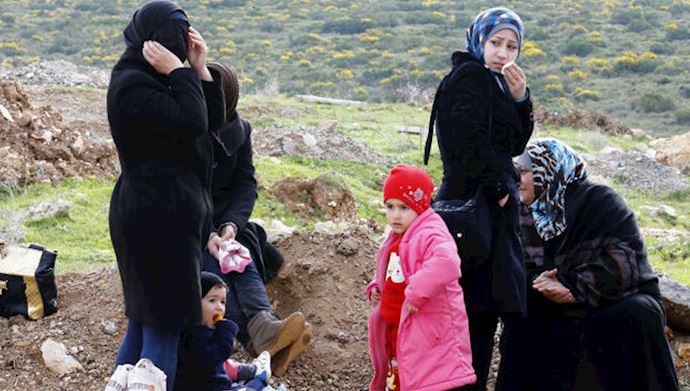
Inside Iran’s new migration crisis

The majority of migrates are from provinces of Kermanshah, Khuzestan, Lorestan,Bluchestan and Fars
Analysis by PMOI/MEK

Oct. 26, 2018 - As Hurricane Michael leaves a seaside Florida town in an existential crisis, a new wave of migration hits Iran, and it’s going to change the population map and leave Iran in an existential crisis. But this time, the wave of migration rises from drylands.
In July 2017, Hassan Rouhani’s advisor in water, agriculture, and environmental affairs told the state-run website Aftab News that 70 percent of Iranian people –almost 50 million people– have to migrate to save their lives if the water crisis continues.
No agriculture, no life; Lack of both irrigation and potable water drive these people from dryland to other places, leaving deserted villages behind. Now we can hear the sound of migrates’ steps through the media, mostly moving from the southern and central regions toward the green lands of Mazandaran province in northern Iran.
According to official reports by the Presidential Deputy in Strategic Planning and Control, over 5.5 million people migrated internally in Iran between 2006 and 2011. The report also indicates that 78 percent of those inhabited cities and 22 percent chose to live in villages. 
The majority of migrates are from provinces of Kermanshah, western Iran; Khuzestan, Lorestan in the south-west; Bluchestan in the south-east and Fars southern Iran. Migrates mostly moved to Northern provinces of Tehran, Alborz, Isfahan, Gilan, and Mazandaran.
The first question that strikes the mind is “why?” Why should millions of people leave their own houses and lands for new and strange locations? Water crisis could be the first answer to the question, but the main reason is more complicated and stems from Iran’s political history.


Background of internal migration

The Motaleat Shahri Magazine, the journal of urban studies, explains the concept of migration in Iran. The magazine spring of 2013 issue highlighted that the concept of migration started in the aftermath of WWII during the Pahlavi’s era. The era coincided with the half-baked growth of capitalist relations, the growing role of petroleum in the political economy of Iran, and farmers’ dependence on cash. The occupation of Iran by the Allied Forces in WWII prepared the ground for more migration from villages to cities. However, the rate of internal migration to cities was 1.5 percent during 1956-1962.
The second wave of migration belongs to 60s when Shah’s government launched a series of reforms called “White Revolution”, the agenda that continued during the current regime to date. The 60s era witnessed a swift extension of cities and the expansion of governmental bureaucracy. Figures show the catastrophic results of Shah’s reforms, as the urban population was 31.4 percent in 1956, but it increased to 71.3 percent in 2011.

Friday, October 19, 2018

MARYAM RAJAVI SALUTES STRIKING TEACHERS IN IRAN

By INU Staff
INU- The leader of the Iranian Resistance, Maryam Rajavi, has praised the brave and noble teachers of Iran for their strike against poor working conditions.
Rajavi said: "The catastrophic situation of the employed and retired teachers is the product of the repressive policies of the anti-cultural regime of the mullahs, and as long as this regime is in power, it will even get worse.”
She then called on the Iranian people, particularly the youth, to join with her and express solidarity with the educators, as well as the other striking workers, like the truck drivers and the merchants.
These strikes have shown that there is no limit to the public anger against an abusive regime that has only brought them torture, execution, war, terrorism, poverty, unemployment, and corruption.
October 14 in protest to their dire livelihood conditions (including poverty), repression, security atmosphere in schools, and a refusal to grant them their rights.
The sit-in, called for by the Coordinating Council of Teachers Syndicates in Iran (CCTSI), also registers the teachers’ objection to the Iranian Regime’s violation of the right to free education for all, non-standard schools, a drop in education, low-level content of educational books, large class sizes, and the lack of funding required for education in the country.
They also called for the implementation of the Public Service Management Act, the rating plan, and the full-time teacher's plan, as well as the release of jailed teachers.
The CCTSI said in a statement ahead of the strike: “Out-of-control inflation and climbing prices have gripped the country, and the purchasing power of teachers, like that of many other hard-working classes, has fallen significantly.
What’s more, the cost of education is on the rise, and the Iranian government and parliament have failed to answer to teachers’ faltering quality of life and the ailing education system. The time has come for us to protest this systemic disorder.”
Their protest spread across Tehran, Alborz, Isfahan, East Azarbaijan and West Azarbaijan, Fars, Khorasan Razavi, North Khorasan, Kurdistan, Kermanshah, Semnan, Qazvin, Mazandaran, Hamedan, Yazd, Markazi, Lorestan, Ilam, Bushehr, Chahar Mahal and Bakhtiari, and Kohgiluyeh and Boyer Ahmed.

Sunday, March 4, 2018

Iran: Demonstration of 500 Looted Creditors, Chanting Death to Rouhani

On Saturday March 3, 500 looted creditors of the Caspian, the Iranian Alborz, Samen Al-Hojaj, Arman and the looterd people who came from Mashhad to Tehran, gathered in front of the regime’s parliament.


The protesters chanted: Death to Rouhani, death to Ali Larijani (speaker of the regime's Parliament); Is this the house of the nation, or the thieves’ center; Victory is from God, down with this deceitful government; they stepped on Islam, they slammed the people; Larijani is a judge (head of the judiciary), he is playmate with the thieves.

Sunday, July 30, 2017

Evin Prison: The Iranian regime’s notorious torture factory


By Tony DuheaumeSpecial to Al Arabiya EnglishSunday, 30 July 2017


The Iranian regime lives in constant fear of an uprising to overthrow it. Such is its paranoia where opposition groups are concerned it has spent the whole period of its existence, eliminating dissenters.

The approach to any form of opposition shows how insecure this regime has become. But as far as extreme brutality is concerned, it could not be more prevalent than that of the regime’s treatment of dissidents at Evin Prison, where guards use torture to humiliate their captives before executing them.
Through the despicable acts taking place here, the lack of humanity shown by the prison authorities toward all those who speak out against the regime, mirrors the insecurities of the entire state.
Located at the foot of the Alborz mountains in northern Tehran, Evin Prison was originally constructed in 1972, under the reign of Mohammad Reza Pahlavi. It was then operated by his infamous security and intelligence service (SAVAK).

Opponents of the Shah

Thousands of political prisoners were incarcerated there during that period, including many supporters of the Peoples Mojahedin Organisation of Iran (PMOI/MEK), fierce opponents of the Shah, and it was from this point on, its reputation of hell on earth had begun.
With Evin Prison being one of the most notorious prisons in the world, just the mention of its name conjures up emotions of fear and foreboding in the hearts of ordinary Iranian citizens, as it has become synonymous with political repression, mass hangings and torture.
This infamous place is where those entering find themselves at the mercy of brutal prison guards, who at this point in time, operate under the control of the Islamic Republic of Iran’s Secret Service (VAVAK).