Showing posts with label Rouhani’s. Show all posts

Friday, October 26, 2018

Inside Iran’s new migration crisis

The majority of migrates are from provinces of Kermanshah, Khuzestan, Lorestan,Bluchestan and Fars
Analysis by PMOI/MEK

Oct. 26, 2018 - As Hurricane Michael leaves a seaside Florida town in an existential crisis, a new wave of migration hits Iran, and it’s going to change the population map and leave Iran in an existential crisis. But this time, the wave of migration rises from drylands.
In July 2017, Hassan Rouhani’s advisor in water, agriculture, and environmental affairs told the state-run website Aftab News that 70 percent of Iranian people –almost 50 million people– have to migrate to save their lives if the water crisis continues.
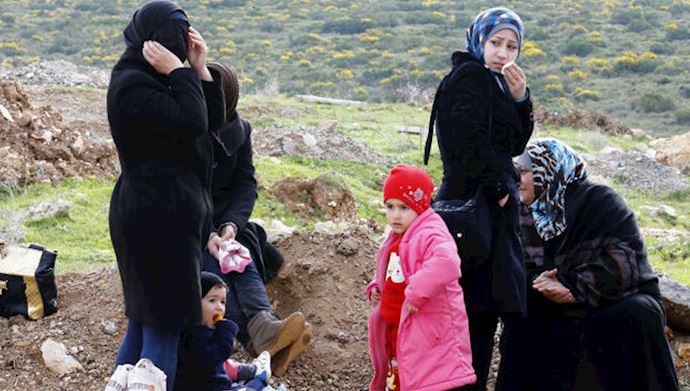
No agriculture, no life; Lack of both irrigation and potable water drive these people from dryland to other places, leaving deserted villages behind. Now we can hear the sound of migrates’ steps through the media, mostly moving from the southern and central regions toward the green lands of Mazandaran province in northern Iran.
According to official reports by the Presidential Deputy in Strategic Planning and Control, over 5.5 million people migrated internally in Iran between 2006 and 2011. The report also indicates that 78 percent of those inhabited cities and 22 percent chose to live in villages. 
The majority of migrates are from provinces of Kermanshah, western Iran; Khuzestan, Lorestan in the south-west; Bluchestan in the south-east and Fars southern Iran. Migrates mostly moved to Northern provinces of Tehran, Alborz, Isfahan, Gilan, and Mazandaran.
The first question that strikes the mind is “why?” Why should millions of people leave their own houses and lands for new and strange locations? Water crisis could be the first answer to the question, but the main reason is more complicated and stems from Iran’s political history.


Background of internal migration

The Motaleat Shahri Magazine, the journal of urban studies, explains the concept of migration in Iran. The magazine spring of 2013 issue highlighted that the concept of migration started in the aftermath of WWII during the Pahlavi’s era. The era coincided with the half-baked growth of capitalist relations, the growing role of petroleum in the political economy of Iran, and farmers’ dependence on cash. The occupation of Iran by the Allied Forces in WWII prepared the ground for more migration from villages to cities. However, the rate of internal migration to cities was 1.5 percent during 1956-1962.
The second wave of migration belongs to 60s when Shah’s government launched a series of reforms called “White Revolution”, the agenda that continued during the current regime to date. The 60s era witnessed a swift extension of cities and the expansion of governmental bureaucracy. Figures show the catastrophic results of Shah’s reforms, as the urban population was 31.4 percent in 1956, but it increased to 71.3 percent in 2011.

Fears and hopes for the new European package and its new office in Iran

Analysis by PMOI/MEK

Iran, Oct. 26, 2018 - The Iranian regime faces an increasingly heated internal debate and factionalism over Europe and how to engage it.
Rouhani’s supposedly moderate faction considers Europe the only escape the Iranian regime has. But Europe does not hide that in order to legitimize its engagement with the ruling theocracy in Iran, the union needs to have an office in Tehran from where it can monitor the human rights situation in the country.
Khamenei’s faction meanwhile, knowing that oppression and censorship are the artery of the regime, vehemently opposes the idea of such an office and doesn’t want to pay such dear a price for a package that doesn’t entail anything tangible.
On October 21, after a meeting with foreign minister Javad Zarif, Falahatpishe, chief of the security and foreign affairs commission in the Iranian parliament, said: “In two days the document related to the economic relations between Iran and Europe after the US left  should be ready and we are waiting to receive this document.”
Falahatpishe also announced that Europe’s financial special purpose vehicle will be finalized before November 4, but was still skeptical about the practical outcome.
“We believe that Europeans have the necessary resolve to maintain the JCPOA and give a positive response to Iran’s engagement politics, but we still need to wait and see how much power they have.”
“Unfortunately, the type of behavior we witnessed in small and large European companies and even banks shows that they don’t have the necessary power for a confrontation,” he added.

Mahmoud Vaezi, Rouhani’s chief of staff, referred to a developing cooperation with the European Union and said: “Especially in the current climate, we have made some arrangements with the EU in regards to JCPOA.” He added that, “the opening of EU’s office can be beneficial for our economic cooperation with the union.”
But opponents of the plan are vocal about their concerns. Mashreq website writes: “Mr. Vaezi! The European Union wants the office for infiltration and sabotage.”
Even proponents of EU’s plan to circumvent the new sanctions have their doubts about how effective and practical the measures can be.
On October 21, Fararu website quotes Beheshtipur, a pundit close to Rouhani’s faction, saying that Europe won’t be the savior of Iran’s economy.
“I think, what Iran and Europe intend to do is sort of a shoestring channel for trading. In fact, Europe is very much tied-hands when it comes to doing much for Iran… We need also consider Europe’s ability, capacity, and situation.”
Iran’s fears and hope and the internal tensions between different factions in the ruling elite about Europe’s package have root in the simple reality that without the US, Europe can’t provide much tangible economic benefits to Iran.

Sunday, June 17, 2018

Iranian Regime’s Fear of PMOI/MEK Revealed in Remarks on Iranians’ Grand Gathering in Paris

By Mahmoud Hakamian
Iran’s economic and social crises are pushing the Iranian society deeper into an eruptive state, with the signs being clearly seen in significant increase in recent ongoing protests staged by people from different walks of life.
The National Council of Resistance of Iran (NCRI) is going to hold its Grand Gathering in Paris on June 30, to support Iranian people’s uprising and protests and promote their demand for a regime change in Iran. The gathering shows that Iranian people’s protests are strongly backed both domestically and by the international community.
Iranian regime officials and media meanwhile are expressing their fear of the gathering in their remarks, while still weeks away from the event.
In a press conference held on Sunday June 11, 2018, regime’s Foreign Ministry Spokesman claimed that “Rouhani’s government has had talks with French officials for cancelling the gathering.”
Bahram Ghasemi then reminded France that “the MEK (The People’s Mojahedin Organization of Iran which is the main force inside NCRI) holds gatherings in France every once in a while. This is not acceptable for Iran (the regime), as we’ve said that no double standard approach should be adopted, thereby dividing the terrorism into a good one and a bad one.”
Ghasemi then began threatening France, saying “those who give permit for such gatherings are wrong, as they themselves will be affected by the consequences as well.”


Monday, March 5, 2018

Iranian Regime Officials Fear Regime's Bleak Outlook

NCRI Staff
NCRI - As protest rallies continue to spread across Iran, state officials and media warn over regime’s dark future.
“The country is faced with a lot of super-challenges”, acknowledges Eshaq Jahangiri, first vice-president of Hassan Rouhani’s government, for the nth time, adding”we have challenges in different economic, social, cultural and political areas, both domestically and internationally. Restoring social assets is a crucial issue for us. But unfortunately, dialogue has been taken off the agenda and replaced by conflict instead, which is going to apply a heavy pressure on the society.” (State-run website, February 26, 2018)
Meanwhile, Mohammad Maljoo, an economist close to Rouhani, points to a “huge volume of interactions raised by people’s daily lives” as the driving force and underlying layer of recent protests, which by no means could be harnessed. “And if the political system is not going to reconsider its policies, we’ll definitely experience even bigger avalanches”, he adds. (State-run Iran newspaper, February 26, 2018)
Regime’s Former Science Minister ‘Moein’ points to dominating presence of Iranian youth in the country’s recent uprising and daily protests, saying “our country is faced with the issue of disappointment. Social harms are an iceberg only the tip of which is visible. We are a country of fault lines. But more than natural fault lines, we are faced with social and generational ones within our society. And the main reason for the country’s non-development is rooted in these same corruptions, distrusts and discriminations.” (State-run Jamaran website, February 26, 2018)

Friday, March 2, 2018

A Close Look At Iran's Budget

Continued from page 1
Bonds are another source of providing for a government’s budget andcabinet intends to escalate this amount by at least $45 billion.
Bonds, however, are only applicable in a popular government, last experienced in Iran under Prime Minister Mohammad Mosaddegh back in the early 1950s. This is not the case in today’s Iran where protesters are heard chanting, “Death to Rouhani” and “Death to Khamenei,” in reference to Iranian Supreme Leader Ali Khamenei.
Another source from which Rouhani seeks to provide for his budget is through slashing cash handouts/subsidies. This “moderate” figure intends to deprive 30 million people, providing an additional $5 billion to his budget. This is tantamount to taxes, being nothing but plundering millions of Iranians already living in poverty.

Tuesday, October 24, 2017

WHY DO HUMAN RIGHTS CONTINUE TO DETERIORATE IN IRAN?

BY: Donya Jam
So far during President Hassan Rouhani’s tenure (between August 2013 and September 2017), reports indicate 3,111 inmates have been executed in Iran.  This figure could be higher as the country is known for carrying out executions in secret. Among those executed include 81 women and 24 people arrested under the age of 18. The most recent case of Iran carrying out a juvenile execution was in August 2017;Alireza Tajiki, 15-years-old at the time of his arrest,
was hanged in the city of Shiraz.  Tajiki’s execution was strongly condemned by the United Nations Special Rapporteur on Iran and human rights organizations such as Amnesty International.
Iranian political analyst Shahriar Kia, whose articles can be reached on various credible international media and works closely with the Iranian opposition, the National Council of Resistance of Iran (NCRI), said human rights have “deeply deteriorated” under Rouhani’s rule.
Simultaneous with an increase in executions, “Many human rights activists, reporters, college students, and workers have been arrested by security forces, parallel to prisoners being placed under torture,” Kia explained.
As seen especially in recent months, brutal forms of punishment such as hand amputations, denial of medical treatment, flogging and beatings continue.

Saturday, October 21, 2017

Human Rights Abuses Continue in Iran

London, 21 Oct - According to reports, at least 3,111 inmates have been executed in Iran between August of 2013 and September of 2017, the years of President Hassan Rouhani’s tenure.
Included in this number are 81 women, and 24 individuals who were arrested while they were under the age of 18. In fact, in August this year, Alireza Tajiki, who was 15 years old at the time of his arrest, was hanged in the city of Shiraz. The United Nations Special Rapporteur on Iran and human rights organizations such as Amnesty International strongly condemned Tajiki’s execution.
Iranian political analyst Shahriar Kia, journalist and activist who works closely with the Iranian opposition, the National Council of Resistance of Iran (NCRI), said human rights have “deeply deteriorated” under Rouhani’s rule.
Kia went on to say, “Many human rights activists, reporters, college students, and workers have been arrested by security forces, parallel to prisoners being placed under torture.”
Examples of this were seen in recent months, such as the October 5th death of Mohammad Jarahi, political prisoner and labor activist imprisoned for the past five years, who was denied adequate medical treatment. A large number of political and ordinary prisoners remain in need of medical treatment.
Although international organizations have repeatedly called for the Iranian regime to halt executions and torture, human rights abuses continue.
In late September of this year, according to the state-run news agency IRIB, Younes Davoudi, the Deputy Prosecutor of the province of Qom, announced that four prisoners had been executed on drug related charges and at least three prisoners had their hands amputated on theft charges.

Friday, October 20, 2017

WHY DO HUMAN RIGHTS CONTINUE TO DETERIORATE IN IRAN?

far during President Hassan Rouhani’s tenure (between August 2013 and September 2017), reports indicate 3,111 inmates have been executed in Iran.  This figure could be higher as the country is known for carrying out executions in secret.

Among those executed include 81 women and 24 people arrested under the age of 18. The most recent case of Iran carrying out a juvenile execution was in August 2017; Alireza Tajiki, 15-years-old at the time of his arrest, was hanged in the city of Shiraz.  Tajiki’s execution was strongly condemned by the United Nations Special Rapporteur on Iran and human rights organizations such as Amnesty International.
Iranian political analyst Shahriar Kia, whose articles can be reached on various credible international media and works closely with the Iranian opposition, the National Council of Resistance of Iran (NCRI), said human rights have “deeply deteriorated” under Rouhani’s rule.
Simultaneous with an increase in executions, “Many human rights activists, reporters, college students, and workers have been arrested by security forces, parallel to prisoners being placed under torture,” Kia explained.

As seen especially in recent months, brutal forms of punishment such as hand amputations, denial of medical treatment, flogging and beatings continue.

Monday, September 25, 2017

POWERFUL PROTEST BY IRANIAN ACTIVISTS OVER ROUHANI'S SPEECH AT UN

politicians, and people from the Iranian diaspora gathered outside the United Nations General Assembly  in New York on Wednesday September 20, to protest Iranian President Hassan Rouhani’s speech.
Amir Emadi, the spokesman for the Organization of Iranian American Communities (OIAC) noted that Rouhani should not be accepted in New York, a city so dedicated to human rights, and certainly not at the UN.
Some protesters dressed in caricature-esque costumes of Rouhani and Iran’s Supreme Leader Ali Khamenei , designed to highlight the grotesqueness of the Regime that has murdered over 120,000 political dissidents, while others gave out literature which documented the Regime’s crimes, and more still chanted, played music, and spoke up for human rights in Iran.
Regime Change
One of the overwhelming themes of the rally was the growing call for regime change in Iran and throughout the rally shouts of “Rouhani. No, no, no” and “Free, Free Iran” erupt spontaneously from the crowd.
Emadi asserted that the people of Iran are ready for change, as documented by the over 11,000 protests that have happened in Iran in the past year, While John Bolton, the former US ambassador to the UN, stressed the urgency of getting the mullahs out of Iran and reiterated his promise from July’s Free Iran rally that the Iranian Regime would not see its 40th anniversary.

Thursday, August 17, 2017

THE EU DISREGARDS HUMAN RIGHTS IN IRAN

By Hamid Bahrami       

The formal inauguration ceremony of Rouhani’s second presidential term was held earlier this month. The High Representative of the Union for Foreign Affairs and Security Policy, Federica Mogherini, attended the event as a special guest.The Italian Commissioner is known to be one of the EU officials who supports a policy of appeasing the Iranian regime.
The EU’s foreign policy chief also met President Hassan Rouhani, Foreign Minister Javad Zarif and the Foreign Policy Advisor of the Supreme Leader, Ali-Akbar Velayati.
Mogherini’s presence at the ceremony sends a shameful message and gives a green light to the Iranian government to continue its suppression of human rights in the country.
Economically, it is a fact that Iran presents a tempting opportunity for the EU. But aside from Iran’s malign actions in the Middle East and continued support for terrorism, one should ask the following question: Is the EU concerned about the human rights situation in Iran?
In reality, the EU has never put serious pressure on the Iranian government over human rights. Experts, human rights activists and members of the Iranian opposition have consistently asked the EU to make any economic relations with the regime in Tehran contingent upon verifiable improvements of the human rights situation and an end to executions, but the EU has always preferred trade.
It is a fact that since the revolution in 1979, the Iranian people have suffered greatly due to systematic human rights violations by the government.

Saturday, August 12, 2017

Tortured by 'Moderates'

Hassan Rouhani was sworn in for his second term as president of Iran on August 5, surrounded by fresh flowers, fervent followers, and around 500 foreign officials. Representatives of the United Kingdom, France, the United Nations, and the Vatican rubbed shoulders with the Syrian prime minister, Hezbollah second-in-command Naim Qassem, Palestinian Islamic Jihad leader and FBI Most Wanted Terrorists list member Ramadan Abdullah Shallah, and murderous Zimbabwean dictator Robert Mugabe. The Westerners didn’t seem uncomfortable in such company; indeed, European Union foreign policy chief Federica Mogherini was described as the star of the show after Iranian members of parliament elbowed through the crowd to take selfies with the diplomat.
But why should they have been bothered? They were in Tehran, after all, to celebrate the renewed rule of a man who has overseen a steady increase in killings—Iran has the world’s highest per capita execution rate. Three days before Rouhani’s inauguration, Amnesty International released a damning report on conditions in the country: “Iran’s judicial and security bodies have waged a vicious crackdown against human rights defenders since Hassan Rouhani became president in 2013, demonizing and imprisoning activists who dare to stand up for people’s rights.” The press release capping Mogherini’s visit didn’t mention the European-based organization’s report—or human rights issues at all—instead focusing on “the EU’s unwavering commitment to” the Joint Comprehensive Plan of Action nuclear deal. It’s unlikely Mogherini brought up the subject even in her private meetings: She was pictured smiling in multiple photo-ops with government officials.

Thursday, August 10, 2017

Rouhani’s cabinet comprised of torturers, executioners, IRGC members & hostage takers

The cabinet introduced by Iranian President Hassan Rouhani to the regime’s parliament on Tuesday is a slate of Revolutionary Guards members, hostage takers, executioners and torturers who have played the most active role in wars, crackdown, massacring, exporting terrorism and fundamentalism, and killing the region’s nations.
A look at the report card of a number of  new ministers proves what the Iranian Resistance said in its May 20th statement following the sham presidential election. “In Rouhani’s second term massive economic and social destructions along with political suppression would continue. Rouhani neither wants, nor is able to seriously alter the foundations, structure or behavior of this historically backward regime… And indeed it should never be expected from him, who for the past 38 years has held the highest positions in the regime’s security and military apparatus in domestic suppression and war mongering. And as his rivals have noted, he was the one who called for public hanging of conspirators during Friday prayers right from the beginning.”
Mohmmad Javad Azari Jahromi, the Minister of Communications and Technology, is one of the new members of Rouhani’s cabinet. He has been a Ministry of Intelligence (MOIS) agent since the age of 21, known for his interrogations, torturing and censorship. During the 2009 uprising he was appointed to  Technical Department and Director of Surveillance to control and cut off communications by the protesters. He expanded the surveillance branch, and played a special role in arresting demonstrators and quelling the uprising.

How Iran views the new US sanctions

“…first, the Majlis (parliament) will take steps in this regard. If they have the Congress, we have the Majlis,” he said in a weak reaction. This is a president whose executive branch is in charge of the Iran nuclear deal, passing on the official response to the legislative branch.
Aside from legal and technical aspects of these sanctions, Tehran is currently facing regime change policy and support for the Iranian opposition, represented in the National Council of Resistance of Iran (NCRI).
Ahmad Khatami, a member of Iran’s Assembly of Experts, said Iran’s enemies are seeking to topple the establishment. This has left the entire Iranian regime deeply concerned, rendering it unable to establish a strong position in the face of the status quo.
Prior to this Iranian Foreign Minister Mohammad Javad Zarif and Deputy Foreign Minister Abbas Araqchi also expressed weak remarks in response to the new U.S. sanctions.
Members of Khamenei’s camp have used their platform in Friday prayers to call on Rouhani’s cabinet to take a strong stance. There are voices also saying that Iran’s Central Bank and the entire government will eventually be sanctioned.
Iran’s reactions are of political importance as they indicate how this crisis is resulting in major internal tension.


ANALYSIS: IRGC bypass sanctions through Rouhani's 'smile diplomacy'

This week marks the beginning of Hassan Rouhani’s second presidential term, which is vital for the existence of the ruling theocracy in Iran.
In his inauguration speech, Rouhani described his plans to have high level relationships with world. However after the speech, Supreme Leader Ali Khamenei called for standing against America.
At first glance, there seems to be a significant conflict of priority, but in reality this is just a political deception directed by these two clerics.
On the face of it, president Rouhani claims that he is pursuing a detente policy with US and Arab countries. However, in reality, his government allocates billions of dollars, which was gained from the nuclear deal, towards the Islamic Revolutionary Guard Corps (IRGC) and its ballistic missile program development.
Rohani’s actions reminds one of the English proverb, “Do as I say, not as I Do”.
The experience over the span of almost four decades has shown clearly that there are no moderates within the clerical regime. The policies of the so-called reformists have consistently been based on abusing the international trust.
Politically, considering the growing debate about a US policy of regime change, it is safe to say that all regime factions are alarmed over the new, effective American sanctions on Tehran. Thus, Rouhani, as president, immediately met senior IRGC commanders to discuss the crisis and hammer out solutions.
The IRGC dominates Iran’s economy and plays a key role in Tehran’s destabilizing activities, support for terrorism and domestic crackdown. That is why any action aimed weakening it will leave the regime in a perilous condition and facing an existential threat.
Consequently, when President Trump signed the “mother of all sanctions” into law, which effectively opened new doors to end the clerical rule in Iran, Tehran’s deputy foreign minister, Abbas Araghchi, announced that Rouhani’s government will increase its backing of the IRGC and its Quds Force.
In international relations, a president or a head of government is known as the official representative of a country while voices of parallel institutions are not taken as the official policy.

Saturday, July 22, 2017

YEARS INTO NUCLEAR DEAL, US POLICY ON IRAN NEEDS MAJOR MAKEOVER


byAli safavi __July marks the second anniversary of the nuclear agreement between the Iranian regime and the five permanent members of the U.N. Security Council plus Germany. Former U.S. President Barack Obama envisioned the agreement — known as the Joint Comprehensive Plan of Action (JCPOA)— as a potential starting point for a broader rapprochement between the ruling theocracy and the West.

Obama had insisted that with Hassan Rouhani as the regime’s “moderate” president, Tehran would begin to exhibit a more positive behavior. Now, in his second term in office, the promise of moderation under Rouhani’s leadership has proven empty. That is because Rouhani neither wants nor is capable of reform. After all, it is not the president but the supreme leader who defines the contours of the regime’s short-term and long-term strategic direction.
That the possibility of moderation in the Iranian theocracy is a total delusion was reflected in Secretary of Defense James Mattis's recent interview with Washington state’s Mercer Island High School newspaper.
Secretary Mattis dismissed the May 19 Iranian presidential election as “not really an election” and highlighted the stark differences between the ideology of the Iranian regime and the character of the Iranian people.
Still more significant, Mattis endorsed the message that had been presented to the House Foreign Affairs Committee last month by Secretary of State Rex Tillerson. At a hearing, Tillerson suggested that American foreign policy should be focused first upon confronting the regime over its regional destabilization and then ultimately upon facilitating transition to a democratic system of government, driven by existing voices of opposition. The Defense secretary, too, reiterated that the Iranian regime is the most destabilizing force in the entire region. 
After 38 years of the clerical rule in Iran, the world is beginning to understand that stability in the Middle East requires the removal of the Iranian regime, known for being the world’s foremost state sponsor of terrorism and the only full-fledged theocracy in the modern world.
While the U.S. administration has imposed new sanctions on individuals and organizations with ties to the Iranian ballistic missile program, it is now mulling the designation of the Islamic Revolutionary Guard Corps (IRGC) as a foreign terrorist organization.  
By highlighting elections in Iran as a sham and also the fundamental divide between the regime and the Iranian people, Secretary Mattis did undercut much of the previous administration’s rationale for futile rapprochement with the Iranian regime.
Since the regime is both unwilling and incapable of reforming itself, democratic change at the hands of the Iranian people and their organized opposition should be recognized as the only viable option to deal with Tehran’s multi-faceted nefarious conduct. Until this situation changes, nothing else about Iran will change, not even its commitment to developing a nuclear weapon as part of its bid for regional hegemony and global influence.
This is the message that was delivered to a cheering crowd of tens of thousands of Iranians at the “Free Iran” rally in Paris on July 1 by the Iranian opposition leader Maryam Rajavi and by other international supporters of the National Council of Resistance of Iran (NCRI). Rajavi used the opportunity to urge the U.S. and its allies to formally recognize the right of the Iranian people and their organized opposition to oust the dictatorship. A democratic Iran, she added, is an imperative and is within reach. An alternative that can affect change exists.
The Free Iran rally went a long way toward showcasing the depth of Iranian people’s animosity toward the regime. Media outlets reported that the event was attended by some 100,000 people, mostly Iranian expatriates, and it featured messages from domestic dissidents and accounts of the more than 10,000 known acts of protest against the regime over the past year.
It also highlighted a flurry of activities by supporters of the NCRI and its key component, the Mujahedin-e Khalq (MEK), inside Iran who are campaigning for democracy.
Two years after the nuclear deal, it is time for a serious and comprehensive Iran policy makeover based on realities on the ground. This means designating the IRGC as a terrorist entity, expelling the Iranian regime and its proxies from the region, taking effective initiatives to permanently block the Iranian regime’s path to a nuclear bomb, and recognizing the Iranian people’s right to topple the regime and establish a democratic and peace-seeking representative government that would be the source of stability and peace in the region. 
originally published in the hill

Thursday, July 6, 2017

The 1988 massacre in Iran


NCRI - In the summer of 1988, the Iranian regime summarily and extra-judicially executed 
tens of thousands of political prisoners held in jails across Iran. The massacre was carried 
out on the basis of a fatwa by the regime’s then-Supreme Leader Ruhollah Khomeini


The facts:
• More than 30,000 political prisoners were massacred in Iran in the summer of 1988.
• The massacre was carried out on the basis of a fatwa by Khomeini.
• The vast majority of the victims were activists of the opposition PMOI (MEK).
 • A Death Committee approved all the death sentences.
• Mostafa Pour-Mohammadi, a member of the Death Committee, is today Hassan Rouhani’s Justice Minister.
• The perpetrators of the 1988 massacre have never been brought to justice.
• On August 9, 2016, an audio tape was published for the first time of Khomeini’s former heir acknowledging that that massacre took place and had been ordered at the highest levels.
http://ncr-iran.org/en/news/human-rights/20932-the-1988-massacre-in-iran